Thursday, 11 April 2013

This is so cute!

Since we are learning about the endocrine system...


Keep This in Mind: Reflection on "Scanning Psychopath"

Q: We are afraid of psychopaths because they have no qualms about hurting other people. Discuss. 

A: This statement is quite true. Psychopaths have personality traits like ruthlessness and a lack of guilt that make them capable of doing things that other people wouldn't even be able to imagine. We cannot predict what a psychopath would do because we would be fundamentally unable to do such things. This really hit me with the example of Ed Gein. Even just typing out what he did--murdering women and taking bodies from graves and making their skin into furniture--is extremely uncomfortable and unthinkable. Another aspect of psychopaths that makes them scary is that there is no way to "cure" or treat them: it is very difficult to change the way that they think, or to instil true emotion into a person that does not actually feel anything. Furthermore, psychopaths are so manipulative and charming that a true psychopath would be very difficult to detect. This makes us feel a sort of paranoid fear because you would never know if anyone around you is a psychopath. As we heard in the presentation, even if criminal psychopaths are jailed for their crimes, their abilities to manipulate people make them more than 2.5 times more likely to receive parole than other criminals (so released criminals are more likely to have psychopathic traits). Psychopaths have very little fear themselves, and hardly get nervous. As a total, this makes psychopaths particularly scary because they have no weaknesses: they do not experience emotional attachment, they are very logical, they are masters of manipulation and they are not remorseful. Crudely put, there is no way we could "defeat" a violent psychopath. Our utter helplessness when it comes to psychopaths makes the chance that they are present around us terrifying.  
That being said, I do not want to "victimize" people with psychopathic traits, as Mr. Chung put it. Not everyone who has these traits would do these things, and as we learned in the presentation, most psychopaths are not even very violent (they would not commit violence for the sake of violence). When I read the excerpt of Professor Kevin Dutton's book Wisdom from Psychopaths?, I can see how psychopathic traits can be useful in today's world. Ruthlessness, charm and the rest can be toned down to self-preservation. One of the psychopathic patients that Dutton talks to in the excerpt jokingly puts it as having "too much of a good thing".  
In summary, I think the fact that psychopaths have the ability to do what is so morally wrong even though they know it is wrong, and that they have no weaknesses makes us very afraid of them, but we have to realize that not everyone who has some psychopathic traits can be stereotypically put into the category of criminals, and that to an extent people with psychopathic traits are beneficial and have an advantage in society. 

Sources: The article by Kevin Dutton--A MUST READ!!! http://www.scientificamerican.com/article.cfm?id=wisdom-from-psychopaths

Shaken to the Core: Reflection on "Opening Up Brain Surgery"

Q: Treatment for Parkinson's disease often hinders impulse control in humans. Therefore, patients living with Parkinson's disease should not be medicated. Agree or disagree? Justify your response.

A: After doing some research on Parkinson's treatment, I think Parkinson's disease patients should be medicated even if the medication itself sometimes leads to a lack of control. This is because the lack of control for unmedicated Parkinson's patients, especially as time goes on, is much more than the occasional spasm that is a side effect of the medicine. 
Occasional gaps in control (medically known as dyskinesias) are a long-term symptom of the most commonly used Parkinson's drug: carbidopa-levodopa. Parkinson's is caused by a decrease in dopamine levels in the brain. The drug counters this by allowing the natural chemical levodopa to be converted into dopamine in the brain, a process regulated by carbidopa. Thus, the drug is the most effective option available today. 
Parkinson's disease is all about it becoming increasingly difficult to control your movement, but if the medicine can significantly lower this, then even if it lets a couple of spasms slip by, the patient will still be better off than if they had no medication. 
At least, that's what I think is meant by the term "impulse control"--not being able to command movement, since that's what I saw listed as a long-term side effect for the most common medication, carbidopa-levodopa. 
If "impulse control" means not being able to manage compulsive behaviours like eating and gambling, the culprits are drugs called dopamine agonists, not the previously mentioned carbidopa-levodopa. 
Dopamine agonists mimic dopamine, but they are not as effective as carbidopa-levodopa. To be honest, they are not used as widely as carbidopa-levodopa, instead being used in combination with carbidopa-levodopa for a longer-lasting effect. 
So first of all I don't think they would have a very great affect on control of compulsive behaviours, because they are simply not used as much. However, does control of compulsive behaviour really affect the patients that much? From the video we watched, the surprisingly young lady who suffered from Parkinson's disease was most disheartened because she could no longer control little things that we take for granted, like being able to wield a mascara wand with accuracy. 
I do not know if she was unable to put on mascara despite her medication, but I feel if medication could help her do that small task even a little bit better, then she would be a lot more happy and hopeful. To me it seems that the little things impacted the patients more than issues like eating or gambling. 
Either way, I think it is worth it to take these medication despite its side effects because the flip side is so much worse. These drugs will restore at least some control in your life, affecting you not only physically but mentally and emotionally as well. These medications, if they allow the patient to feel less like their disease is literally taking over their life, should be used. 

Sources: http://www.mayoclinic.com/health/parkinsons-disease/DS00295/DSECTION=treatments-and-drugs , http://www.pdf.org/en/parkinson_prescription_meds

Monday, 8 April 2013

Sleep is for the Weak: Reflection on "While You Were Sleeping"

(I wrote that title mostly because this picture seriously describes my life every day now...)

Q: High school students are sleep deprived, therefore less homework should be assigned to them. Agree or disagree? Discuss. 

A: Hmm. It is totally not ironic that I'm blogging this instead of getting a good night's sleep. Just kidding. Sort of. 
Well, to be honest, this discussion point doesn't really apply because for the most part, teachers never check homework anymore. Homework isn't mandatory, and if you never do your homework, it doesn't affect your mark (is homework completion even a learning skill on your report card anymore?). However, it is better to finish your homework so that you know you actually understand what you are learning, as well as to prepare you for any tests/exams. So should high school students get less homework so that they can sleep more?
In my opinion, no. And I have two reasons for why I think this. 
#1: It really depends on the kind of homework it is...if it is mindless and pointless, I guess not. Although I personally feel victorious after completing a lot of really easy homework...But I don't think we should get less of the select homework that was picked to make sure we understand and can apply what was really important in that day's lesson. Alternatively one could think of more homework as more practice for the test, so getting more is better because practices makes perfect. If you find that having a lot of homework is really affecting your sleeping habits, then maybe you could adjust when you sleep: maybe you could take a nap at lunchtime or during a spare, or if you really hate staying up, just go to sleep early and wake up early in the morning to do your homework. In high school, the homework timeline is pretty flexible, so if you try there are probably a lot of places where you can fit in some sleep. 
#2: I don't think having less homework would let most people sleep for a longer period of time. From personal experience, I know that even if I had less homework today, (because of my lack of willpower) I would see it as more time to do something fun instead of more time to sleep. What I'm trying to get at is I think people do stay up for homework, but the real reason for why high school students get so little sleep is that they are distracted by things much more interesting than homework.
In summary, my opinion is that homework is pretty beneficial and is not the main reason for lack of sleep: if you really want to sleep but have a lot of homework, you can definitely find enough time to catch some zzZZs (if you'll admit it). So that's what I'm going to do now. G'night!

Monday, 1 April 2013

Cancelling Cancer: Reflection on "The Cancer Genome"

(Happy April Fool's!)

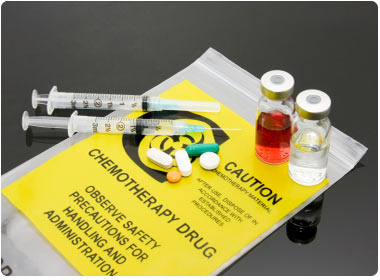
Q: After the in depth discussion regarding chemotherapy, list the advantages and disadvantages of this treatment. 

A: The main advantage of chemotherapy is that when it works, it works well. If it works, it can kill cancer cells and put the patient into remission. Also, chemotherapy is one of the only widely used cancer treatment methods. 
However, chemotherapy has many disadvantages. There are many unpleasant physical side effects like fatigue, nausea, vomiting and lack of appetite. Even more serious effects, like lung, kidney, and nerve damage, are possible with prolonged use. Another symptom we all associate with chemotherapy is hair loss. However, I think it's important to not only look at hair loss as a physical effect, but also an emotional and mental effect. Hair loss because of chemotherapy makes a cancer patient feel as if the cancer has changed who they are as a person. Thus all of the pain and suffering from chemotherapy is a major disadvantage. 
(Partial source: http://www.livestrong.com/article/71774-disadvantages-chemotherapy/)


Q: Do you think that it is an effective method to "cure" cancer? Why or why not? 

A: http://www.naturalnews.com/023689_cancer_chemotherapy_patients.html claims that chemotherapy only contributed to the 5 year survival of about 2% of adults (in America and Australia). Although this is probably not the most trustworthy website, if this is true, it means that 98% of the time, chemotherapy does not contribute to a long term "cure". So either chemotherapy only buys a patient less than 5 years of additional time, or it doesn't buy a significant amount of time at all. Also, chemotherapy is essentially flushing poisons into a patient's body in the hope that they will attack the cancer. So how can we determine whether a chemotherapy patient dies from cancer or dies from the poisons used in chemotherapy? In other words, is it really chemotherapy that kills cancer patients?
I don't think anything really cures cancer: what we have at the moment are treatments, not cures. And due to our limited knowledge and our limited range of treatments for cancer, I think that chemotherapy is probably the most effective of all of them, especially if combined with other methods like surgery or radiation therapy. Which just goes to show how necessary it is to support cancer research. But in itself, I don't think chemotherapy is effective; in fact, chemo itself might be a killer. Yet it's a gamble that many people have no choice but to take. 

Q: In your opinion, under what circumstances should an individual consider chemotherapy?

A: An individual should consider chemotherapy if their tumour can easily be eliminated after the treatment, if their cancer is early-stage, or in some cases if they are young or have people who depend on them. This is because people like this have not only a higher likelihood of success, but also are more likely to be able to move on after the treatment. For young people, unless they have a severe cancer and not much time left, I think that since they have so much more to experience in life, it is more worth the risk and pain of chemotherapy. But if you have a family or friends that need you...it's difficult to say. Do you want to try and stick around for them no matter the cost to your body, or do you prefer to keep them from seeing you suffer?
If the patient is frail, elderly or in a later-stage cancer, I don't think it would be worth it to undergo chemo. It would bring about pain at a time where one should really be enjoying every moment one has. 

In general though, I think it is difficult for people to say no to chemotherapy because you know once you say no that you are signing up to die. Even though the hope that chemotherapy gives you is only 2%, it is hard to let go of that hope. Saying no to chemotherapy is kind of like giving up a fight with cancer, and that's really hard to take. All I know is that I used to think that if I was ever faced with this decision, I would say yes to chemotherapy without even thinking, because it would be the same as being asked "do you want to live or not?". But now I'm not so sure...it's not as clear cut as I thought it was. 

P.S. The Fault in Our Stars by John Green is the best book about cancer ever! Although I hate to label it as a cancer book...it's so much more. And it has the most beautiful quotes. 


Thursday, 14 March 2013

From Stem to Roots: Reflection on "Fast and Furious"

The article "Fast and Furious" dealt with induced pluripotent stem cells (iPS cells), and their possibilities, difficulties and future. But first we must deal with the roots of the issues surrounding iPS cells. 


Q1: Discuss the significance of iPS cells in stem cell research. Do you believe it would be better to replace embryonic stem cells with iPS cells despite the success embryonic stem cells already have? What are the advantages and disadvantages?
A1: I think iPS cells are very significant, and their concept is pretty revolutionary. It was creative to realize that we were making assumptions with the belief that cell specialization is an irreversible one-way process, and the only way to get unspecialized cells is to harvest them at the embryo stage. iPS cells show that we cannot assume anything in nature, and that it may be possible (in fact it is possible!) to take a specialized cell and go "back in time" to induce pluripotency. So I'm really impressed with this kind of thinking, and to me, this kind of thinking alone is very significant in scientific research. If we can get more people to question and think like this, we will probably find potentially very simple answers to complicated problems. 
     But specifically for iPS cells, I think that they are very significant because they are personalized to suit someone's individual needs. They can be taken from any person and perhaps even any body part, and used to create whatever tissue is needed. This makes iPS cells safer to use than embryonic stem cells, and maybe even cheaper, since they are sourced from your own body. If this kind of technology can be perfected, it would be very powerful. Also, it does not deal with the same ethical issues that embryonic stem cells deal with, because it does not deal with an embryo. I think this would lead to more support overall for the possibility of iPS cells. I think, given time, iPS cell technology could be on par with embryonic stem cell technology, with the added benefits mentioned above. Even if for now embryonic stem cells are safer, it is only because they have had many more years of research behind them. Once iPS cells reach that level of research, I think it will be the preference. 


Q2: What problems do you think could occur with the usage of iPS cells? How do you think we could solve these problems?
A2: I think there could be many technical problems associated with iPS cells. For example, there is a fine line between letting the iPS cells grow enough to regenerate whatever they are supposed to, but also not grow enough that they might cause instead of cure cancer. Also, one of the essential ingredients to making cells pluripotent again, c-Myc, increases the likelihood of developing cancer. There are additional issues such as whether "reprogramming might shove cells so far from what is physiologically normal that they become pathological." However, I think that with any new and potentially useful technology, there are also potential dangers. Hopefully through continued research and studies, ways around these issues will be found. 
     Although I think this is a long shot, a possible problem might be people who do not take care of their bodies because it is so easy to get personalized, specialized cells to replace whatever damage they have done. For instance, people may not bother to exercise or eat right because they can easily replace their coronary arteries or kidney using iPS cells. iPS cells might not pose as much as guilt as embryonic stem cells would, so people would not have as much qualms for using them. But I don't know if this will be an issue unless the price of iPS cells becomes very low. I'm pretty sure that although iPS cell technology would be accessible, it wouldn't be cheap enough to allow for misuse of the technology. For the most part, I feel that iPS cells, like any stem cell, would give hope to people who have diseases or conditions that cannot be treated other than by the replacement of their cells. iPS cells would be a great tool for regenerative medicine, which to me is basically good. 

Wednesday, 13 March 2013

Valley Fold or Mountain Fold? Reflection on DNA Origami

Q: Discuss the possibility of making an entire human being with the technology we have today? What do you think of it? Would you be able to accept an entirely synthesized human? What are the consequences? Do you think science has a limit?

A: Just like origami, the future of gene research is based on the decisions and steps that we take now. But do we really want the end product that we are heading towards?


Admittedly, making an entire human being using the technologies described in the "DNA Origami" article and through other technologies like 3D printing is a long way off. For now we may be able to make individual parts or print organs such as bladders, but making an entire human is quite different. Not only do we have to make this individual parts or organs, but we have to make them come together, make them integrate in a way that will allow them to function. And this is a great challenge. Even though we know a lot about the human body, there are probably millions of ways that our organs and cells rely on each other in order to carry out their duties, connections that we never dreamed of. How will we connect all these things together well enough to synthesize a whole person? 


Maybe we won't need to understand it all, though. I think sometimes these great leaps in science happen with scientists working sort of blindly, not really sure what they are doing but hoping that it might work, and if it does, not really knowing what happened. If we do ever synthesize a human, I think this might be the case, because I don't see how we could ever understand the human body so completely as to connect its parts to make a living organism. 


Which is another aspect of creating a human: do we really want to create life? Personally, I wouldn't want to. I don't think it is right or ethical. Think about how this manmade person would function in society. I feel that even if we tried hard to accept this person socially, we could not help but treat them as inferior to those who were "naturally" made. In fact, we find it hard to accept people who are different even when they are "naturally" made. How much more will we find it difficult to accept someone with a difference as fundamental as this, someone who was not even born?


Why do we need even need to make people in this way? Logistically, our planet already struggles with the issue of overpopulation. It is one thing to make organs or body parts to improve quality of life for those who are already alive but another to selfishly make an entire living person (as we all know from The Island). I don't see the point in creating life. Exploring life has the possibility to benefit people through your discoveries, but creating it is, to me, sort of megalomaniacal. As well, it degrades the life we already have: it makes it seem worthless. 


So does science have a limit? I'm not sure. I definitely think that in many ways science should remain boundless: it encourages us to ask questions, to figure out why and not to just accept what we're told. It's empowering. But with "great power comes great responsibility" (sorry for the cheesiness). In fields like genetics, where we are dealing with the fundamentals of what makes life, we have to constantly consider consequences. I think science can limitlessly find answers, but then it has to be able to use those answers in the right way. For instance, if we ever really find out how to create life, should we actually use our knowledge to create life? We should not always feel pressured to carry out the knowledge we have discovered: sometimes it is wiser not to carry out what we know. If science can learn this wisdom, it will know where the right limits are. 


Your Genes Count: Reflection on the article "Genetics by Numbers"

Q: Collaboration in the scientific community is needed for the future of SNP research. How do you think the difficulties scientists face in trying to collaborate with one another (competition, corruption, politics, greed, pursuit of one's own interests, education etc.) can be overcome and will there be further ramifications?

A: The response to the article "Genetics by Numbers" and its presentation by Kevin has come very late (sorry!!). As to how the difficulties of collaboration in science can be overcome...first of all I want to establish that collaboration is not only necessary for development in SNP research, but is necessary for any kind of research, scientific or otherwise.So the question, although pertaining to SNPs, is really looking for a general reason for why people would share when they don't have to. And I don't think there is any simple solution to that. 

Perhaps the government could fund the institutions who conduct this research based on how much they publish their information. In other words, the more you publish and share, the more money you are eligible for. But of course this has many downsides. For instance, for companies that are privately funded, they do not need to look towards the government for money and so would not bother to publish. Also, depending on the politics of the country, not all governments would want to do this. They might want to keep their research secret. Furthermore, where will the government get all this money from? Because the government doesn't have an unlimited cash reserve, it has to be choosy on what it wants to fund, so it may not be able to fund everyone who publishes their work, which could discourage certain people to publish. 

As for solving issues like politics, maybe scientists could form a transnational group of people that are not affiliated with any one country, sort of like the United Nations. If scientists are willing to make this happen, this would transcend limits that might have been in place due to political friction, as well as bring down some competition. One of the videos we watched featured Neil deGrasse Tyson, the renowned American physicist. Although he was speaking about unity, he also said some things like, "I am first an American, and then a scientist", and that America needed to discover things before other countries did. This kind of irked me because if another country could so easily discover these things too, what does being first or second matter? It seems sort of petty. Maybe an impartial union of scientists can bring down this mindset. 

Sunday, 17 February 2013

Translation Sensation!

The second step in the flow of genetic information is DNA translation. 


  • DNA translation is the production of a protein with an amino acid sequence that is based on the nucleic acid sequence of the mRNA
  • Just like replication and transcription, translation is divided into initiation, elongation and termination.
  • Initiation:
    • Proteins called initiation factors assemble the small and large ribosomal sub-units, mRNA and initiator tRNA. 
    • The small ribosomal sub-unit attaches to the mRNA near the start codon (AUG) and the initiator tRNA (transfer RNA) binds to this codon with its complementary UAC anticodon and the corresponding amino acid, methionine. 
    • The large ribosomal sub-unit joins this structure. Of its three tRNA binding sites, the initiator tRNA occupies the middle P or peptide site, and the A or amino acid site is ready to receive the next tRNA. 
  • The Four Steps of Elongation (the polypeptide becomes longer, one amino acid at a time):
    • With the initiator tRNA at the P site, the next tRNA carrying the right amino acid enters the A site (elongation factors enable the codon of the mRNA and the anticodon of the tRNA to bind).
    • Peptide bonds form between the two amino acids, and the methionine is transferred from the initiator tRNA to the new tRNA, resulting in a dipeptide. 
    • The chain has become one amino acid longer. 
    • The mRNA moves forward by one codon. The empty-handed initiator tRNA is ejected via the E (exit) site. The tRNA carrying the amino acid chain is now at the P site, and a new codon is at the A site, ready to receive its complementary tRNA and amino acid. 
    • This repeats and the polypeptide at the P site grows longer and longer, until termination.
  • Termination:
    • The mRNA reaches a stop codon, at which point the machinery is separated and a protein called a release factor cleaves the polypeptide chain from the last tRNA. 
    • The polypeptide is released and folds in on itself, ready to do its job. 


Transcription Description!

The basis of genetics is the flow of genetic information from DNA to RNA to proteins.
The first step of this process is the synthesis of RNA from the DNA template, better known as DNA transcription.
  • DNA transcription is the synthesis of mRNA from the DNA template and occurs in the nucleus.
  • The objective of DNA transcription is to produce an accurate copy of a small section of genomic DNA
  • There are 3 steps to transcription: initiation, elongation and termination. 
  • Initiation:
    • From the double-stranded DNA, only one strand is transcribed. This strand is called the template or antisense strand. The other DNA strand is called the coding or sense strand. The mRNA produced will be identical to the coding strand, except that it contains the base Uracil instead of Thymine. 
    • RNA polymerase II binds to the promoter region of the DNA, which is a special sequence of nucleotides showing the polymerase where to begin transcribing (TATA on the template strand). Two promoter regions are needed to indicate to the polymerase the correct strand and orientation. While prokaryotic RNA polymerase II can directly bind to the promoter region, in eukaryotes proteins called transcription factors are needed to recognize the promoter region for the polymerase. Without all of the transcription factors, transcription will not take place. The RNA polymerase II together with the transcription factors make up the initiation complex. 
    • The RNA polymerase II then unwinds a section of the double helix.
  • Elongation:
    • The RNA polymerase then begins to synthesize mRNA (messenger RNA) from the template or antisense strand, with U replacing T. The newly produced mRNA is complementary to the template strand, so it is identical to the other DNA strand (aka the coding or sense strand) except with U instead of T. The polymerase still works from 5' to 3', but since it is only synthesizing one strand and moving in one direction there is no need for Okazaki fragments.
    • As one polymerase complex works its way along the template, another complex immediately comes in and starts to transcribe as well. In this way, hundreds of mRNA's are produced at a time from one template. 
    • RNA synthesis is much faster than DNA synthesis--unlike DNA polymerase, RNA polymerase has no proofreading mechanism, so it can go much more quickly. Proofreading is not as essential in RNA synthesis because the worst that can happen is the production of an erroneous protein, which is not as big a deal as an erroneous gene. In this case, speed is of more importance than accuracy. 
  • Termination:
    • Certain nucleotide sequences (AAUAAA in the transcribed RNA) tell the RNA where to stop. When the RNA meets these sequences, it detaches from the DNA and the mRNA is released. The double helix then rewinds. 
  • In eukaryotes, the mRNA must be modified and processed before it can be transported across the cytoplasm to be translated.
    • The pre-mRNA (precursor mRNA) must be converted into mature mRNA by adding a 5' cap (a modified G nucleotide), adding a 3' poly-A tail (many A nucleotides to the 3' end to make the mRNA more stable and last longer in the cytoplasm), and removing any regions of the gene that are not being expressed, such as introns (non-coding regions) and perhaps some exons as well, through splicing via a spliceosome.
    • A spliceosome consists of several snRNP's (small nuclear ribonucleoproteins) which protects snRNA (a small nuclear RNA molecule), as well as other proteins. The snRNA recognizes the ends of the introns, brings the ends together to form a loop, and cuts off the intron, leaving the mRNA that now only contains exons. 

Thursday, 7 February 2013

Weekly Reflection: "Deaf by Design"

On February 6th, 2013, Mr. Chung presented to us an article called "Deaf by Design" together with a video called "Sound and Fury".  After questioning every assumption a hearing person would make of the Deaf, the article and video challenged the viewers to come to some conclusions, so here are mine. 

Q1: Is it more of a blessing or a curse to have the ability to alter our genetic codes?
A1: First of all, I don't think we are altering our genetic codes so much as manipulating them. Now, if asked if this is more of a blessing or a curse...I would say it is more of a blessing because it gives us the choice to make better what we could do absolutely nothing about in the past. Key word: choice. If someone believes that designing a baby to suit specific needs is wrong and unnatural, that is up to them. But with the ability to manipulate genes, others now have the ability to satisfy those needs when before they had no options. It is a curse as well, though, because now we must decide what is ethical and acceptable, and what is not--what is proper and what is misuse. 

Q2: Do the deafs have as much right as the rest of us to abort a fetus that is, in their view, disabled?
A2: Should anyone abort a fetus they believe to be disabled? In some ways, I can understand why people might not want a "disabled" baby--a severe handicap might never allow their child to have a fulfilling life, so never being born could be justified as the more humane option. But for a deaf couple would it be more humane to abort a hearing baby? I don't think this is true. There would definitely be a gap between baby and parents if the child was born, but this in my opinion doesn't justify not allowing a hearing baby to live. I don't think it's enough of an issue. This goes both ways: I don't think it's right for hearing parents to want to abort a deaf fetus. Only in more extreme circumstances would aborting a disabled fetus be justified. 

Q3: Is "disability" a relative term? What constitutes a person's disability? 
A3; Disability is definitely a relative term. Mr. Chung's example of a really annoying ongoing noise would turn a deaf person's "disability" into an advantage. Also, how much of an impediment is a disability? Everyone has something that holds them back compared to everyone else: for example, bad eyesight, a fear of public speaking or even an allergy like me. In many ways every one of us is disabled. We can't be so narrow-minded as to impose what is "normal" for the majority of people onto everybody without considering that these so-called "disabilities" have their own bright sides. 

Q4: Is it Heather's best interest to be raised as the only hearing child in the family?
A4: In Heather's case, it is in her best interest to receive complete support from her family, and being the only hearing child would negatively impact her family life. Her father especially feels very strongly about Deaf culture and said in the video he felt like Heather's wish to hear insulted him and his way of life. Heather needs her father to be supportive of her. Also, if one thinks of her future, being deaf is now less of a disadvantage than ever. There are now so many other ways of communicating other than talking that I'm sure the very bright Heather would capitalize on.